
Imperial city stop
Meknes with Kids: Bab Mansour and Two Days
Plan two days in Meknes with kids. See Bab Mansour, choose a historic interior and decide whether to add the Roman ruins at Volubilis.
A two-day Meknes outline
| Day | Family focus | Leave flexible |
|---|---|---|
| Day 1 | Bab Mansour, El Hedim Square and one or two historic interiors | Opening hours, walking pace, rest stops and any site access limits. |
| Day 2 | Choose Volubilis, Moulay Idriss or a quieter Meknes morning | The excursion transfer, heat, site surface and return time. |
| If passing through | A short overnight between Fes and a wider northern route | Whether one night leaves enough time to see the city without rushing. |
Day one · Gate, square and historic centre
Arrive with time for a simple orientation walk
Start with the location of your accommodation, the nearest food option and the distance to the historic centre. Meknes is a useful place to slow the itinerary down between Fes and an excursion, but the family still needs time to check in and settle. Avoid making the first hour a checklist of monuments.
If you arrive in the afternoon, walk only as far as the children are comfortable and save the main gate for a fresh morning. That gives everyone a clear sense of the streets and creates an easy exit if the day has already included a long transfer.
Day one, morning: begin at Bab Mansour
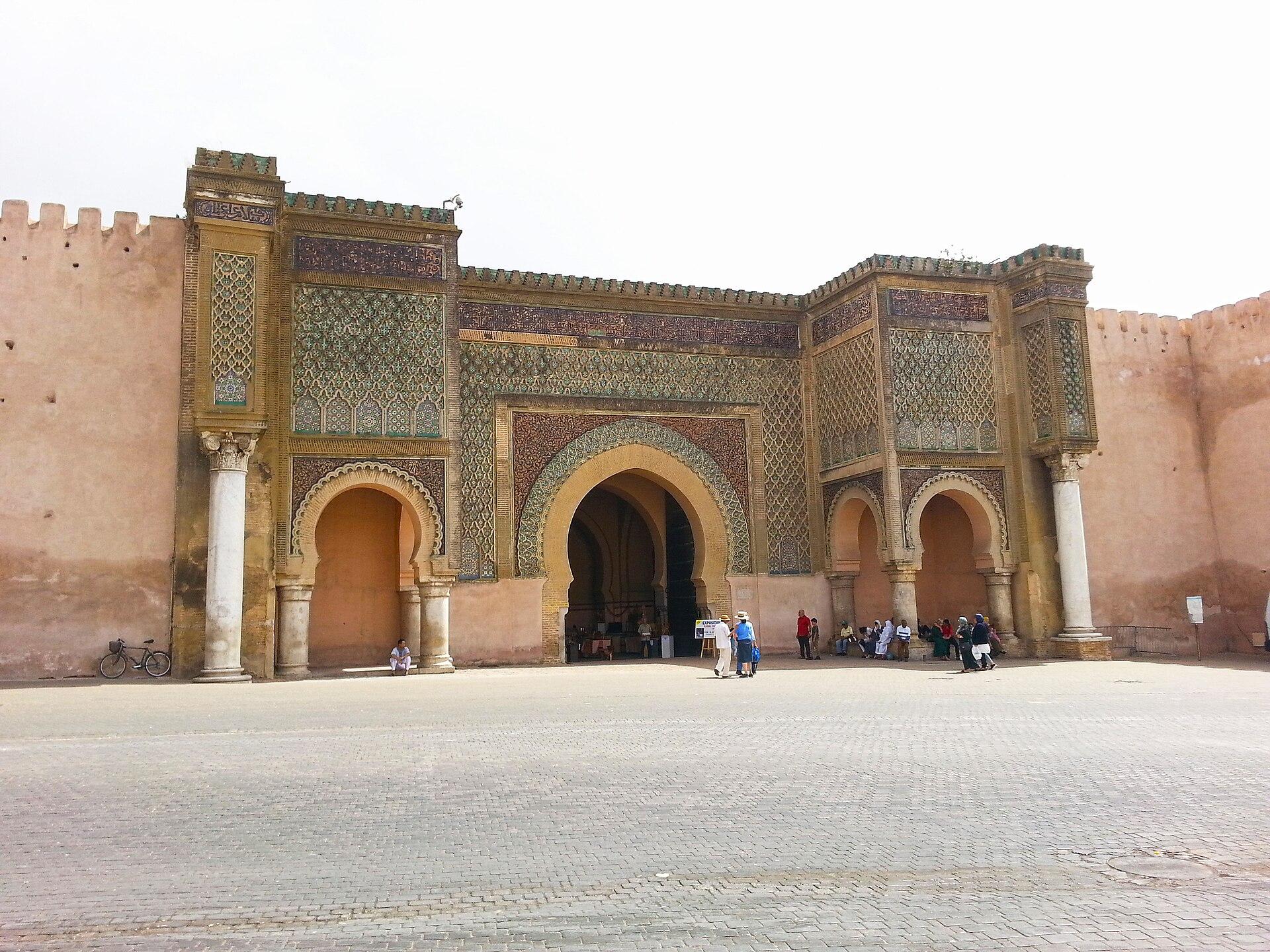
Bab Mansour beside El Hedim Square is a natural orientation point and one of the city's most recognizable landmarks. Give children time to notice the gate’s size, patterns and decorated surfaces before moving onward. A short, focused visit can be more engaging than trying to explain every period of the city’s history at once.
Use the square as a place to pause, observe daily movement and agree on the next stop. Keep valuables secure in a busy public area, set a meeting point if older children will walk with you, and take a photograph of the gate before moving into the surrounding streets.
Day one, afternoon: choose one historic interior
The official visitor guide names Bou Inania Madrasa and the Mausoleum of Moulay Ismail among the city’s principal places to see, along with the royal stables and granaries. Choose one or two that are open and suitable for your group instead of racing between every landmark. Check access rules and opening times shortly before the visit.
Children often need a change of pace after a morning outside. Pair the historic stop with a drink, a meal or a quiet return to the hotel. If the family is still interested, add a short craft or market walk; if not, keep the evening open.
Day two · Volubilis or a slower city morning
Day two, morning: decide whether to go to Volubilis
Volubilis is listed as roughly 30 minutes from Meknes by the national tourism office, which makes it a practical separate excursion for many families. The site is an extensive archaeological landscape, not a compact indoor museum. Choose it when your children enjoy walking and looking for details outdoors, and check what is accessible on your selected date.
Bring water, a hat and shoes that are comfortable on uneven ground. Ask the driver where the agreed pickup point will be and how long you have at the site. Do not assume that every surface is stroller-friendly or that shade is available at each place you want to pause.
For the afternoon outside the city, use the Volubilis visit plan to choose the length of the walk.
Day two, afternoon: keep one option in reserve
If the family has had enough history, return to Meknes for lunch and a slower city afternoon. If you have energy and transport lined up, Moulay Idriss is another named excursion in the surrounding area. The best choice depends on the children’s stamina and the time available, not the number of pins visible on a map.
Leave an unbooked hour before the next transfer or dinner. That buffer lets the family rest, change clothes and review the following day’s route. If you are continuing to Fes, check the departure plan with the driver or station before committing to an additional sightseeing stop.
Use Meknes as a real overnight, not a rushed photo stop
Visit Morocco gives a broad estimate of about an hour between Meknes and Fes and recommends two days in Meknes. A one-night stay can still be useful on a longer route, but it will not provide the same unhurried two-day visit. Decide whether the city is a priority or simply a convenient place to break the journey.
Ask for the exact hotel, transfer and sightseeing plan in writing. Confirm which visits are included, whether an accredited local guide is available, how admissions are handled and which sites require separate payment. These details change by provider and date, so a route outline is not confirmation of current access.
The seven day Marrakech loop visits Meknes on the transfer to Chefchaouen. Book a separate overnight if you want two days in town.
Common questions
How many days should a family spend in Meknes?
The Moroccan National Tourism Office recommends allowing two days. A shorter stop can work if you choose one main sight, but the city and Volubilis are easier to enjoy when they are not squeezed into a rushed transfer day.
Is Volubilis close enough for a family day trip?
Visit Morocco lists the site at about 30 minutes from Meknes. Confirm the exact transfer and plan enough time for the open-air archaeological site, water, shade breaks and the return journey.
What can children see in Meknes?
Families can start with the monumental Bab Mansour gate and El Hedim Square, then choose a historic interior or a day trip. Keep the number of stops manageable and make room for a snack or a quieter break.
Can Meknes be combined with Fes?
The tourism office lists Fes at about an hour away. The cities can be combined on a larger route, but one overnight in Meknes gives the family more time to explore rather than treating the visit as a brief stop.
Is Meknes suitable with a stroller?
It depends on the street, entrance and specific site. Ask the accommodation or local guide about the day’s route and carry a compact stroller or carrier only if it fits your child and the planned surfaces.